

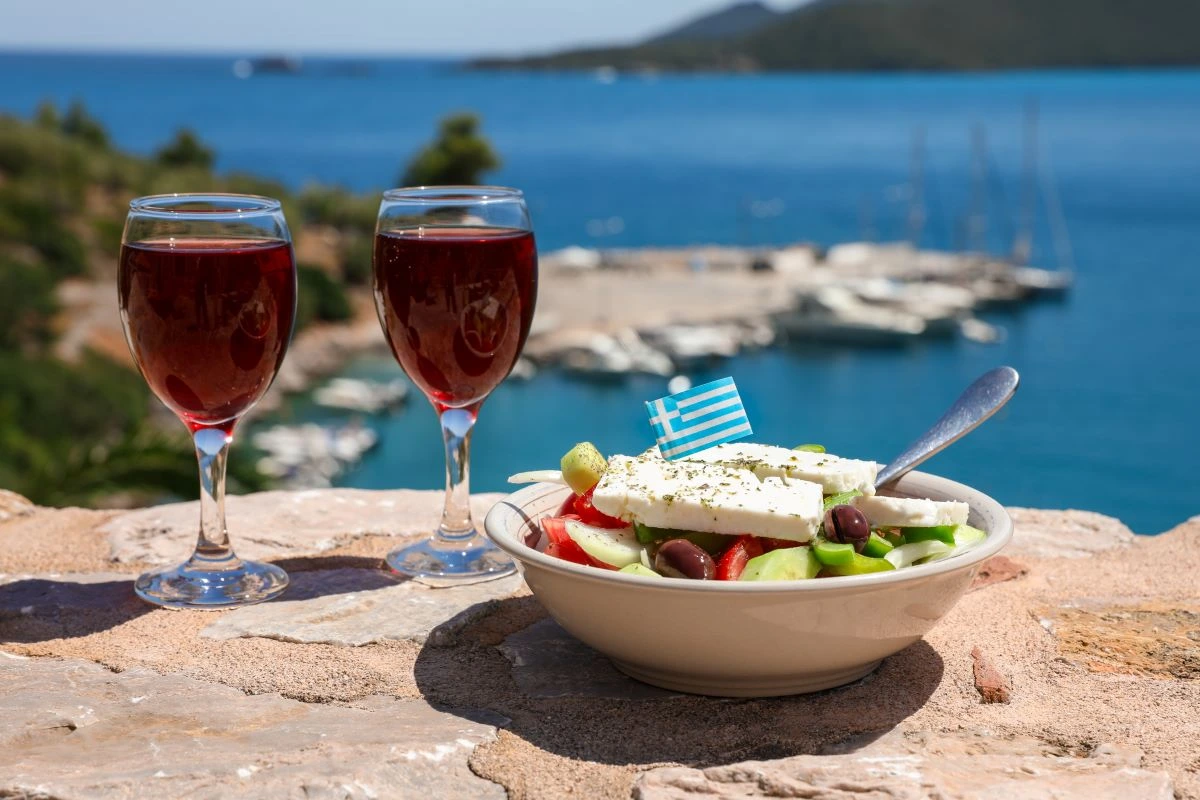
Greek cuisine is one of the oldest in the world, and anyone who has tried it can tell you why.
It provides many of the foundations of the Mediterranean diet, and these culinary pillars—fresh, seasonal vegetables, plenty of olive oil, and a focus on getting the most out of simple local ingredients—make it not only one of the world’s tastiest cuisines but one of the healthiest too.
In fact, Greece features not only one cuisine but many, across the country’s various regions, which reflect geographical diversity as well as a rich history influenced by both the west and the east.
A Very Short History of Greek Cuisine
Ancient Greece
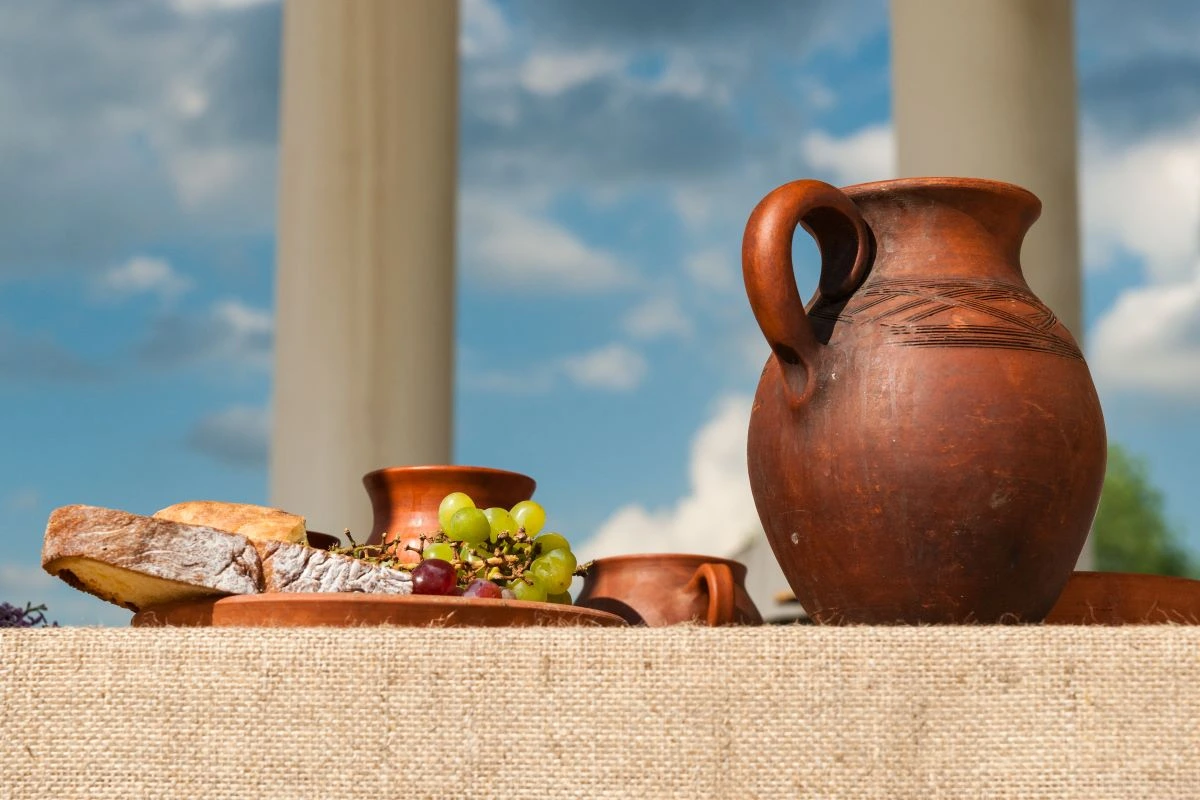
The food of Ancient Greece was built on the “Mediterranean triad†of ingredients: wheat, olives, and grapes.
Diets were largely plant-based, with fish eaten more commonly than meat. Many key elements of modern Greek food, like cheese, bread, figs, olives, and honey, date back to the ancient Greek diet.
Byzantine Period
During the Byzantine period, food continued to be driven by Greek traditions while also incorporating new influences from Rome and the wider eastern Mediterranean.
One notable change was the greater prominence of meat, as increased trade meant more people could afford it, alongside wider access to spices imported from outside Greece.
Ottoman Era
The Ottoman era provided a major turning point in the history of Greek food.
The introduction of spices, pastries, and dishes influenced by Turkish and Balkan cuisines provided a new world of flavors, ingredients, and techniques. Many modern Greek dishes have names that derive from Turkish due to this influence.
Modern Greek Cuisine
In the modern day, Greek cuisine features a balance of tradition and innovation: classic dishes are preserved and enjoyed, but they are also often refined or reinterpreted in contemporary cooking.
Influences from global cuisine bring entirely new ingredients, techniques, and flavors into Greek food, resulting in a culinary tradition that marries the modern with the ancient.
Core Ingredients of Greek Cooking
Greek cuisine is defined by a small number of fresh and high-quality ingredients used repeatedly across dishes. The most common of these are:
- Olive oil: the foundation of nearly every dish
- Feta and regional cheeses: salty, tangy, and versatile
- Olives: both as an ingredient and a table staple
- Meat: especially pork and lamb
- Fish and seafood: essential in coastal and island regions
- Phyllo (filo) pastry: used in both savory pies and desserts
- Vegetables: tomatoes, cucumbers, and onions feature as staples
- Herbs and flavorings: oregano, garlic, lemon, dill

The Structure of a Greek Meal
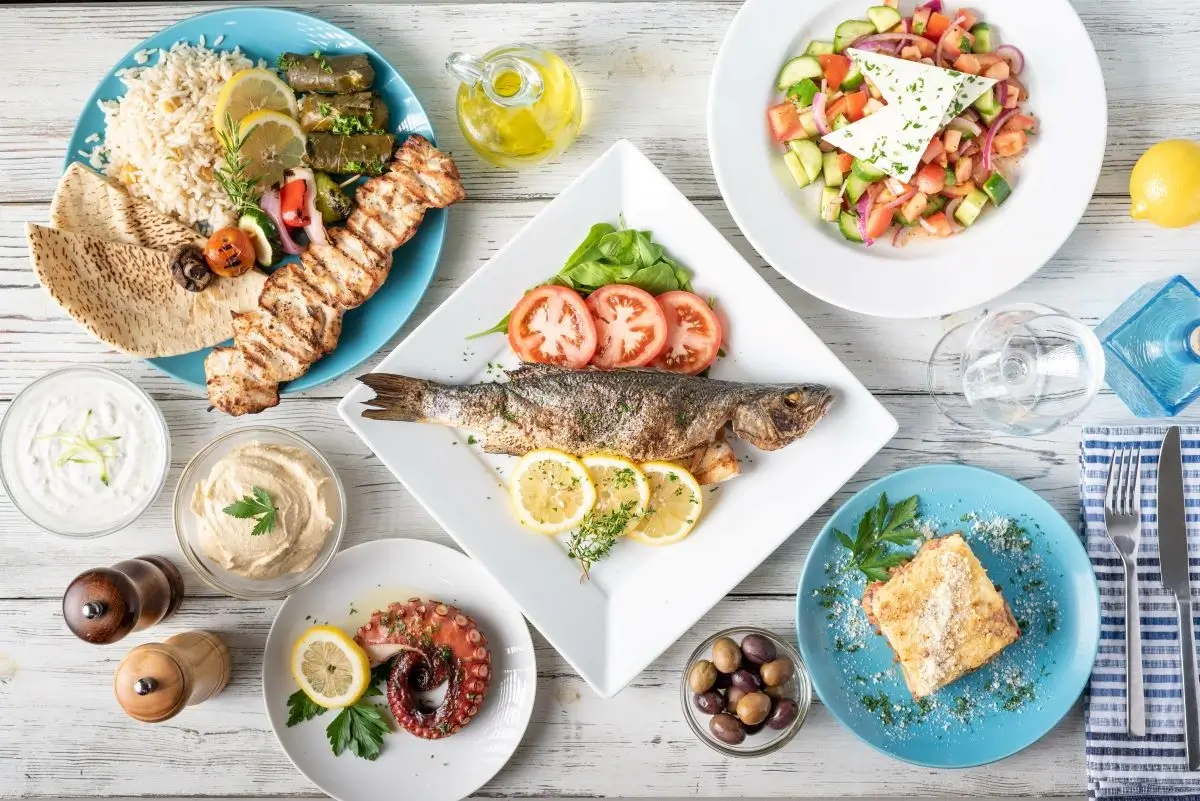
Greek dining is social and shared, often built around multiple small dishes rather than strict courses.
Mezze (Appetizers & Shared Plates)
Small dishes meant for sharing, often served with bread and drinks, mezze dishes can serve as a starter or form an entire meal by themselves:
- Horiatiki (the iconic Greek salad of tomato, onion, and cucumber with feta)
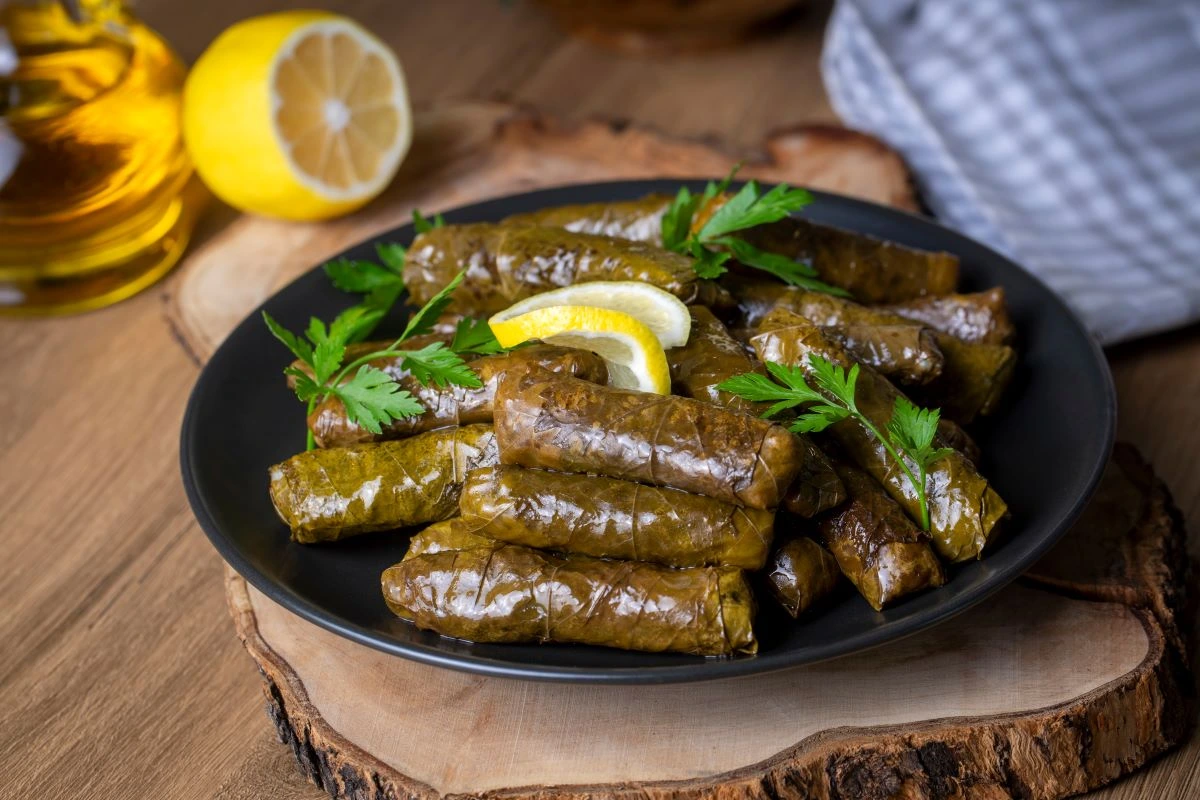
- Dolmades (stuffed vine leaves)
- Tzatziki (yogurt and cucumber-based dip)
- Seafood meze (anchovies, octopus, squid)
- Bread, olives, and assorted dips
- Saganaki (fried cheese)
- Dips: melitzanosalata, taramosalata, skordalia, tirokafteri
Main Dishes
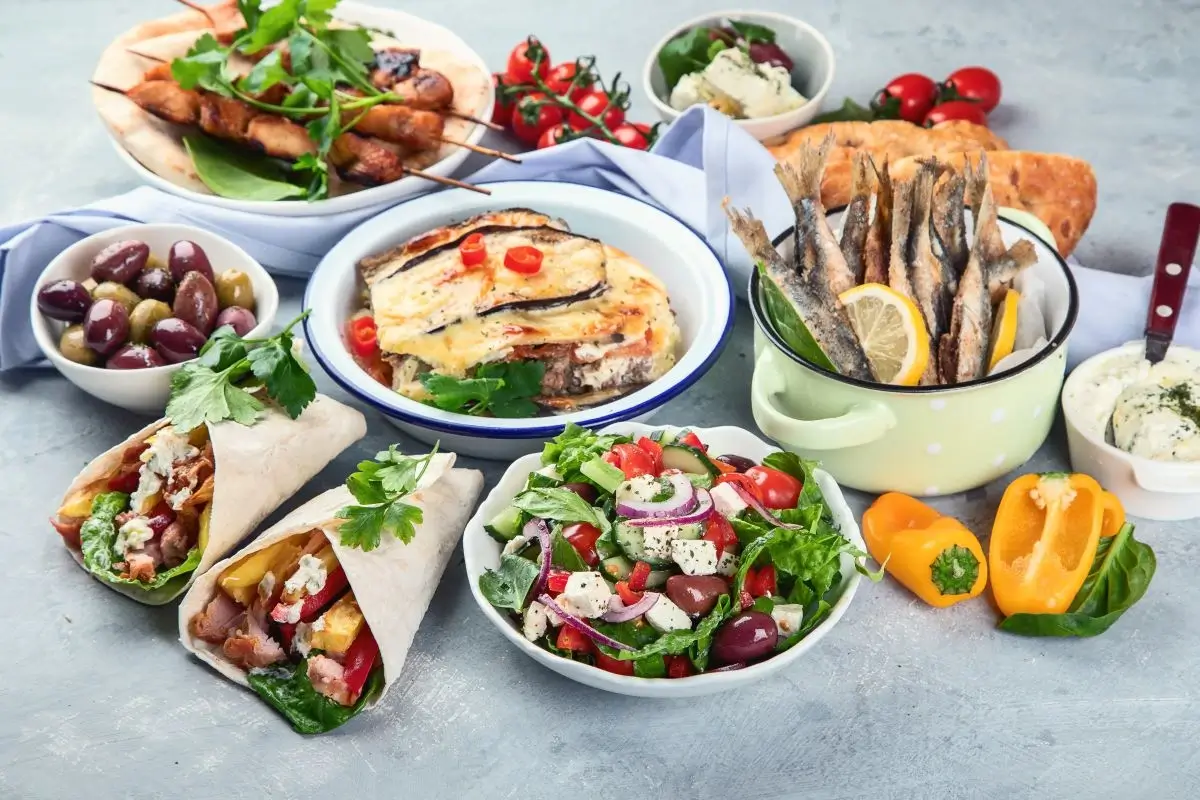
These hearty, flavorful dishes that form the core of the meal are some of Greece’s best-known plates:
- Moussaka (layered eggplant and meat casserole)
- Souvlaki (grilled meat skewers)
- Gyros (rotisserie meat often served in pita bread)
- Spanakopita and other savory pies
- Fasolada (bean soup, often considered a national dish)
- Ladera (vegetables cooked in olive oil)
- Fresh seafood (grilled or simply prepared)
Desserts
Greek desserts are typically sweet, syrupy, and often based on honey and nuts:
- Baklava
- Loukoumades (honey-soaked dough balls)
- Galaktoboureko (custard in phyllo)
- Feta wrapped in phyllo with honey
Regional Specialties
Greek cuisine varies significantly by region:
Crete
Crete’s food is strongly aligned with the Mediterranean diet, featuring lots of fresh, local vegetables cooked with generous amounts of olive oil.
Cretan cuisine sets itself apart through its heavy use of goat meat, often slowly cooked, which reflects the long tradition of goat herding on the island.
Common dishes include:
- Goat dishes: antikristo (large pieces of goat roasted around an open fire), tsigariasto (goat meat stewed slowly in its own juices)
- Kaltsounia (small cheese pastries)
- Tsikoudia (strong local grape brandy)
Northern Greece (Macedonia)
Northern Greece has long been known as a melting pot of immigrants from various Balkan and former Ottoman nations who brought their own food traditions with them.
This region’s cuisine shows a strong influence from this mix of cultures, as can be seen in the greater use of ingredients like peppers, couscous, and wild game like boar and buffalo.
Common dishes include:
- Soutzouki (spiced beef sausage)
- Halva (sesame-based confectionery)
- Filo pies with meat, cheese, vegetables, or sweet fillings
Peloponnese
The Peloponnese is the source of much of Greece’s best olive oil and wine production, so it’s no surprise that these ingredients feature prominently in the region’s cuisine.
As a productive agricultural hub, it also features lots of fresh local vegetables.
Common dishes include:
- Lalaggia (fried dough)
- Gourounopoula (spit-roasted suckling pig)
- Chorta (wild greens fried and served with lemon)
Cyclades Islands
The food of the Cyclades reflects the arid but beautiful landscape of these volcanic islands.
Fresh fish and local cheese and produce are particularly important in this simple and resourceful cuisine.
Common dishes include:
- Tomatokeftedes (tomato fritters)
- Fava (yellow split pea purée)
- Revithada (chickpea stew)
Ionian Islands
On the far west of Greece, the position of the Ionian Islands’ means that they had little historical interaction with the Ottomans and Greece’s neighbors to the east.
As such, their cuisine is more influenced by other conquerors and neighbors to the west, notably the Venetians, British, and Russians, all of whom occupied various parts of the islands at different points in history.
Common dishes include:
- Kreatopita (meat pie)
- Sofrito (beef cooked with vinegar and garlic)
- Pastafrolles (butter biscuits filled with fruit jam)
Greek Drinks & Café Culture
- Wine: Greece is one of the oldest wine-producing regions in the world, and the country is known for its many esteemed grape varieties and wines.
- Beer: While beer was consumed in Ancient Greece, it has had less of a cultural tradition. However, in the modern day, many Greek beers are produced and widely consumed.
- Ouzo: This dry anise-flavored spirit is one of the most iconic Greek drinks and is traditionally enjoyed with a table of mezze dishes.
- Coffee and café culture: Greek cafés are important social hubs where people gather to relax and socialize; the types of coffee available include the strong and unfiltered traditional Greek coffee as well as more modern iced frappé and freddo drinks.

A Rich Tradition
Although many of its most iconic dishes are known around the world, Greek cuisine is less about a set menu and more about a way of eating centred on seasonal ingredients, generous use of olive oil, and meals built around sharing.
Whether in a village taverna or a modern city restaurant, the essence remains the same: simple food, deeply rooted in history, that is designed to be enjoyed together.
Food is just one of the aspects that make life in Greece so appealing. A rich culture, deep history and unspoiled natural beauty combine with modern healthcare and education systems.
With the Greek Golden Visa offering a simple and straightforward way to become a resident, Greece is more accessible to international investors than ever before.
If you’re considering buying property in Greece, Investment Visa is here to offer expert insight and support to guide you through your Golden Visa journey.
Contact one of our experts today or browse our wide selection of Golden Visa-eligible properties for sale in Greece.
-

Who Are Greece’s Golden Visa Investors in 2026?
The latest official data shows who is driving demand for the Greece Golden Visa in 2026, how the investor mix...