

Understanding the Education System of Greece
Parents moving to Greece often ask the same key questions:
- Does Greece have a good education system?
- Can my child attend school without speaking Greek?
- Are international schools available and affordable?
Greece is a popular destination for families thanks to its Mediterranean lifestyle, strong community culture, and high quality of life.
However, the Greek language and alphabet, combined with lower English fluency than in some European countries, can raise concerns for expat parents.
Education in Greece therefore a major consideration when relocating — particularly in relation to language of instruction, school costs, and long-term academic pathways.
The good news is that Greece offers:
- Free public education;
- A structured and reputable national school system;
- A well-established international school network, especially in Athens;
- A growing and evolving higher education sector.

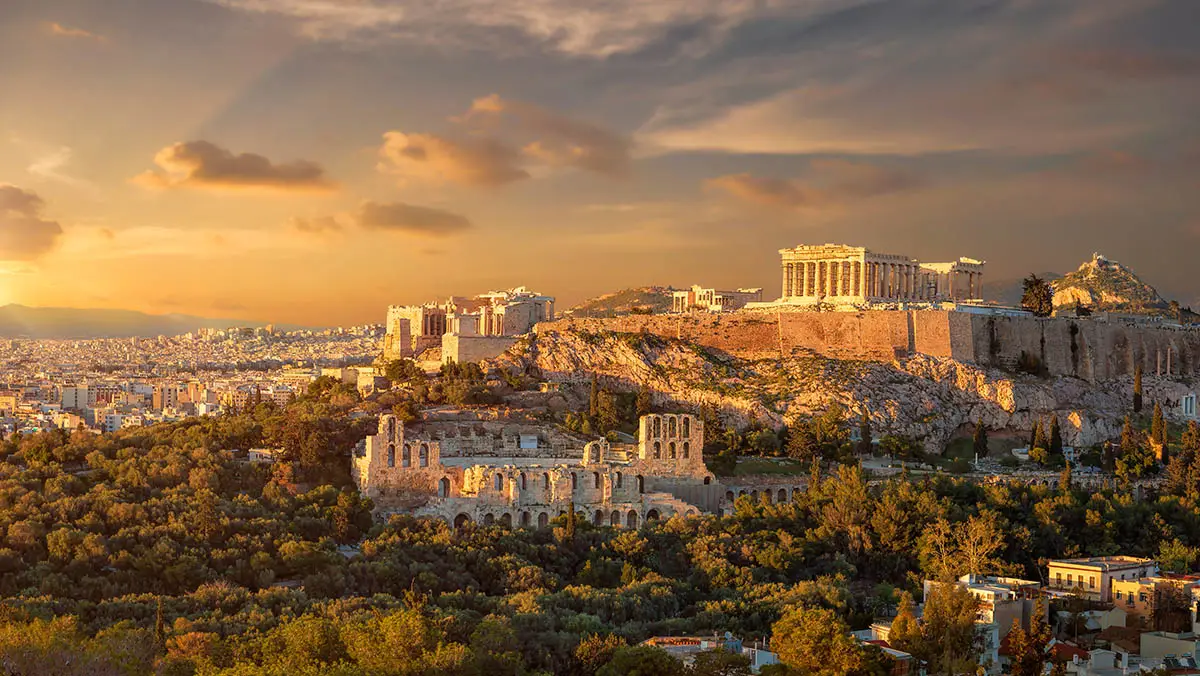
Greece has one of the oldest educational traditions in the world, as the birthplace of Plato’s Academy and Aristotle’s Lyceum.
Today, the modern Greek education system remains robust, accessible, and centrally organized.
The education system of Greece is overseen by the Ministry of Education, which controls curricula, standards, and school operations nationwide.
Public education is free for all residents, including expats with legal residency, and is guaranteed by the Greek Constitution.
Compulsory education in Greece begins at age 4 — earlier than in many other European countries — and continues until age 15.
The system follows a structured progression from early childhood education through primary, secondary, and tertiary levels.
Read More:
Living in Greece Pros and Cons: Must-Know Facts
Cost of Living in Greece: Invest in More Affordable Living
Early Childhood Education (Ages 4–6)
This is the equivalent to pre-school or kindergarten (nipiagogeio).
-
Ages 4–6;
-
Two compulsory years.
This stage focuses on early literacy, numeracy, and social development.
Public kindergartens teach in Greek, which can present a challenge for non-Greek-speaking children, but younger learners often adapt quickly through immersion.
For expat families arriving with young children, this early stage can provide a smoother pathway into the Greek language system.
Primary Education (Ages 6–12)
In Greece, the dimotiko is your primary schools, and it typically encompasses:
-
Ages 6–12;
-
Six years of compulsory education.
The primary curriculum includes Greek language and literature, mathematics, science, history, religion, arts, physical education, and foreign languages (typically English from an early age).
The school day generally runs from 08:15 to 13:15 or 14:15, with optional all-day programs available until approximately 17:00.
The academic year typically runs from mid-September to mid-June.
Primary education provides the foundation for later academic progression and prepares students for lower secondary school.
Secondary Education (Ages 12–18)
Not to be confused with gym class, the gymnasio is, more or less, the equivalent to middle school. Also known as Lower Secondary School, this includes:
-
Ages 12–15;
-
Compulsory for all students
The gymnasio provides a broad academic curriculum and comprises the last stage of compulsory education. At this stage, students begin preparing for more specialized study.
As children grow older, they transition to the lykeio, which includes:
- Ages 15–18;
- Academic or vocational pathways.
Students choose between:
- General Lykeio (academic track), which prepares students for university through subject specialization and national examinations;
- Vocational Lykeio, which combines general education with technical and professional training.
Entry to public universities typically requires success in the Panhellenic national examinations taken during the final year of Lykeio. These exams are highly competitive and play a central role in university placement.
Compulsory education begins at age 4 and continues through age 15, followed by optional upper secondary education.
| Stage | Greek Name | Ages | Duration | Compulsory | Overview |
|---|---|---|---|---|---|
| Pre-Primary | Nipiagogeio | 4–6 | 2 years | Yes | Focus on early literacy, numeracy and social development. Public instruction is primarily in Greek. |
| Primary | Dimotiko | 6–12 | 6 years | Yes | Core curriculum including Greek language, mathematics, science, history, arts and foreign language instruction. |
| Lower Secondary | Gymnasio | 12–15 | 3 years | Yes | Broad academic curriculum completing compulsory education and preparing students for upper secondary pathways. |
| Upper Secondary | Lykeio | 15–18 | 3 years | No | Academic or vocational pathways. The academic track prepares students for national university entrance examinations. |
International schools may follow alternative curricula and academic calendars.
Tertiary Education: Universities in Greece
Higher education in Greece has traditionally been delivered through public universities and technological institutions. Entry is generally based on national examination results or specific admissions criteria.
Public universities are state-funded and offer undergraduate, postgraduate, and doctoral programs across a wide range of disciplines, including medicine, law, engineering, humanities, and business.
Among the most recognized and established universities in Greece are:
- National and Kapodistrian University of Athens;
- Aristotle University of Thessaloniki;
- National Technical University of Athens;
- University of Patras;
- University of Crete.
Other respected institutions include the Athens University of Economics and Business, the University of Ioannina, the University of Thessaly, the University of the Aegean, and the Hellenic Open University.
In a significant development for the Greek education sector, six private universities have been approved to begin operating from the 2025–2026 academic year, marking a historic shift in a country where higher education has traditionally been limited to public institutions.
The new private universities are expected to operate in collaboration with established foreign institutions, expanding options for both Greek and international students.
This reform signals a gradual diversification of Greece’s higher education landscape and may increase international study opportunities within the country.
Schooling Options for Expat Families in Greece
The costs and learning environment in Greece depend on whether families choose public, private Greek, or international schools.

Public Schools in Greece
- Free for all residents, including expats;
- Textbooks provided;
- Instruction is almost exclusively in Greek;
- Catchment-area admission;
- Limited structured support for non-Greek speakers.
Public schools are best suited to bilingual children, younger learners, or families planning long-term integration into Greek society.
However, many Greek families also rely on private tutoring (frontistiria), which can represent an additional cost.
Private Greek Schools
- Fee-based;
- Primarily Greek-language instruction;
- Smaller class sizes;
- Often better facilities than most public schools;
- Some flexibility for expat families.
These schools follow the Greek national curriculum but may offer enhanced resources and academic support.
International Schools in Greece
- Fee-based;
- Teaching in English or another foreign language;
- Internationally recognized curricula (IB, British, American, French, German);
- Strong extracurricular and pastoral support;
- Easier reintegration into other education systems.
Most international schools are located in Athens, particularly in the northern suburbs. Options outside the capital are more limited, and families living elsewhere may need to consider relocation if international education is a priority.
Typical annual fees vary depending on curriculum and age:
- Kindergarten and Primary: approximately €8,000–€12,000;
- Secondary School: approximately €12,000–€18,000.
Many international schools operate waiting lists, and early applications are strongly recommended.
Language Considerations

One of the most important questions for expat parents is whether their child can attend school without speaking Greek.
In public schools, instruction is almost entirely in Greek. While younger children often adapt more easily through immersion, older students may find the transition more challenging without prior language knowledge.
International schools provide English-language instruction and are therefore often the preferred choice for families relocating with teenagers or planning short- to medium-term stays.
For families intending to remain in Greece long term, learning Greek can significantly enhance both academic success and social integration.
Choosing the Right School in Greece
Public, private, and international schools each offer different advantages and learning conditions.
When making a decision, families should consider:
- Length of intended stay in Greece;
- Child’s age and language ability;
- Budget and tuition capacity;
- University goals (in Greece or abroad);
- Location and access to international schools.
Families with young children, especially those planning to stay in Greece for the long term, might consider taking advantage of the free education offered by public schools or the strong educational support of Greek private schools.
Families with older children or who are staying in Greece on a shorter basis would likely be better served by an international school, where language acclimatization would not present an issue.
With early planning and a clear understanding of the system, families relocating to Greece can secure education options that support both lifestyle goals and long-term academic success.
Comparison of Schooling Options in Greece
Public, private Greek, and international schools offer different learning environments, language structures, and academic pathways.
| Feature | Public Schools | Private Greek Schools | International Schools |
|---|---|---|---|
| Tuition Fees | Free for residents, including expats with legal residency. | Fee-based; generally lower than international schools. | Fee-based; typically €8,000–€18,000 per year depending on age and curriculum. |
| Language of Instruction | Greek. | Primarily Greek. | English or another foreign language. |
| Curriculum | Greek national curriculum. | Greek national curriculum. | IB, British (IGCSE/A-Level), American, French, or German systems. |
| University Pathway | Greek universities via national examinations. | Greek universities via national examinations. | International universities; globally recognised and accepted in Greece. |
| Best Suited For | Families planning long-term integration and Greek-language immersion. | Families seeking smaller classes within the Greek system. | Mobile expat families seeking curriculum continuity and English-language education. |
Frequently Asked Questions
Is education free in Greece?
- Public education system of Greece is free for residents, including expats with legal residency. Private and international schools charge tuition.
When does the school year start?
- The academic year typically runs from mid-September to mid-June.
Are international schools recognized globally?
- Yes. IB, British, and American curricula are widely accepted by universities worldwide.
Can expat children attend public schools in Greece?
Yes, provided they have legal residency. However, Greek language proficiency is essential for academic success.

-
Family Homes in Athens
Explore family properties in Athens, from spacious city apartments to larger homes close to the coast, with options across a...