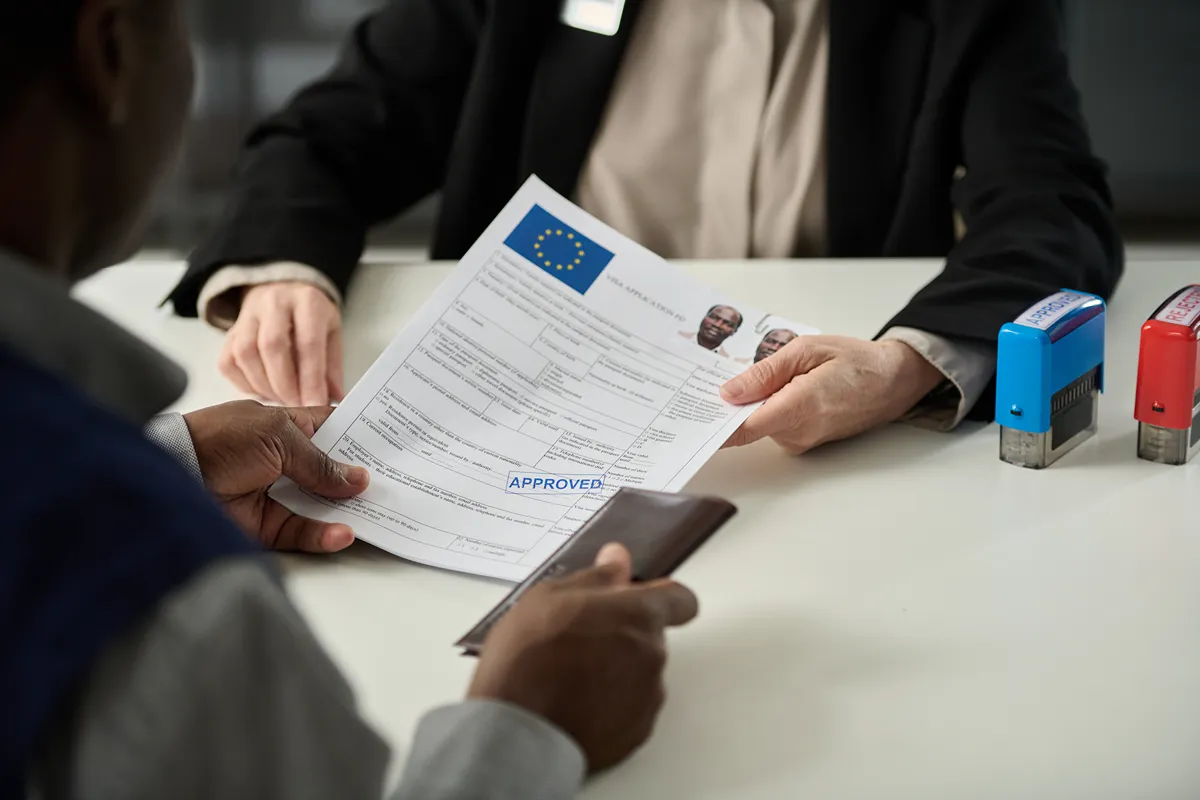



What is Due Diligence?
When applying for a residence permit or citizenship by investment, due diligence is the structured process through which governments verify who you are, how you built your wealth and whether you present any legal, financial or reputational risk.
In short, it's a form of protection for both the country and the integrity of the program.
Due diligence begins long before a file reaches a government department.
Reputable advisory firms conduct an initial pre-screening process.
This includes reviewing passports, corporate structures, business activities, source of funds and in many cases, open-source intelligence checks.
The aim is to identify potential red flags early rather than expose a client to rejection later.
At the governmental level, the review becomes more layered.
Authorities typically examine criminal records from countries of residence and citizenship, confirm tax compliance, verify business ownership and trace origin of funds used for investment.
In many jurisdictions, independent international due diligence firms are engaged to conduct background investigations across multiple databases and jurisdictions.
Due Diligence in European Residency Programs
In the context of the European Union, standards are particularly stringent.
Programs such as the Greece Golden Visa operate under increasing scrutiny to ensure applicants meet anti-money laundering and counter-terrorism financing requirements.
As a result, applicants should expect in-depth financial transparency, including bank statements, audited financials where applicable, and clear documentation evidencing the lawful accumulation of wealth.
Source of funds analysis is often the most detailed component.
- It is not enough to show that capital exists; applicants must demonstrate how it was generated.
- This may involve employment contracts, dividend certificates, business sale agreements, inheritance documentation or property disposal records. Every transfer is traceable. Every figure must reconcile.
Another important layer is reputational risk.
- Even in the absence of criminal convictions, adverse media, politically exposed person status or unresolved litigation can trigger enhanced scrutiny.
- This does not automatically result in rejection, but it does require careful disclosure and explanation.
Due diligence also extends beyond the principal applicant.
- Spouses, dependent children and, in some programs, dependent parents are subject to background checks.
- The objective is risk assessment rather than isolated review.
For investors, this level of examination can feel intrusive. However, it ultimately protects the long-term value of the residence or citizenship obtained.
Programs with robust due diligence frameworks are more likely to retain visa-free travel agreements, political legitimacy and regulatory stability.
In other words, the strength of the passport or residence card is directly linked to the rigor of its screening process.
From an advisory perspective, preparation is key. Applicants should begin compiling documentation well in advance, ensuring consistency across tax filings, corporate records and banking history.
Discrepancies do not automatically signal wrongdoing, but unexplained inconsistencies can delay or jeopardize an application.

Here’s What Due Diligence Typically Looks Like in Practice:
Identification Verification
- The first stage of due diligence is the verification of the applicant’s identity.
- This includes standard "know your client" checks such as passport and national ID verification, proof of address, CVs, business profiles, and an initial overview of the source of funds.
- At this stage, advisory firms also conduct preliminary red-flag screening using open-source intelligence to identify potential inconsistencies or risk indicators before the application progresses further.
Screening
- Once the applicant’s identity has been confirmed, the process moves into risk and background screening.
- The objective is to identify legal, financial, or reputational risks early and avoid avoidable rejections later in the process.
- This stage typically includes criminal background checks, sanctions screening, politically exposed person (PEP) identification, and adverse media searches across international databases and public records.
Risk Assessment
- Based on the findings of the screening phase, a formal risk assessment is conducted.
- Applicants are generally classified as low, medium, or high risk according to factors such as the complexity and transparency of their source of funds and wealth, jurisdictional exposure, business activities, PEP status, and any adverse media or litigation history.
- This classification determines the level of scrutiny required in subsequent stages.
Enhanced Due Diligence
Applicants assessed as higher risk are subject to enhanced due diligence.
- This involves deeper and more extensive investigation than standard procedures, often including detailed source of wealth analysis, extended transaction histories, corporate structure reviews, and independent third-party background investigations.
- Enhanced due diligence may also require additional disclosures, clarifications, or supporting documentation to address identified risk factors.
In highly regulated environments, particularly within the European Union, these stages are not optional formalities.
They are integral to ensuring compliance with anti-money laundering and counter-terrorism financing frameworks and safeguarding the credibility of investment migration programs.
In investment migration, due diligence is not a hurdle to overcome.
It is a shared safeguard, as it protects governments from reputational damage, preserves program sustainability and ensures that genuine investors can access global mobility frameworks with confidence.
Ultimately, successful applications are not defined solely by capital deployed, but by clarity, compliance and credibility.
Investment Visa’s Due Diligence Approach
At Investment Visa, due diligence begins well before an application is formally submitted to a government authority.
Our role is not only to guide investors through residency or citizenship by investment programs, but also to reduce the risk of rejection by ensuring that every application is prepared with clarity, consistency, and full regulatory awareness.
Before a client proceeds with any investment, our advisory team conducts a structured pre-screening process designed to identify potential concerns at the earliest stage.
This includes reviewing identification documents, analysing the declared source of funds and wealth, examining corporate structures where relevant, and assessing jurisdictional exposure.
This early-stage review allows potential issues to be addressed before an application reaches government authorities or independent due diligence firms.
Where additional scrutiny may be expected, we work closely with clients to prepare supporting documentation, provide contextual explanations, and ensure that financial records, tax filings, and banking histories remain consistent and traceable.
 Caption: Some of the Investment Visa team members.
In practice, this preparation significantly reduces the likelihood of delays, requests for additional information, or application rejection.
- We're also proud of never having had a residency or citizenship application rejected.
Due diligence is not merely a procedural step. It is a critical safeguard that protects the applicant, preserves the integrity of the program, and ensures that investments are deployed through a compliant and transparent process.
For investors pursuing residency through programs such as the Portugal Golden Visa or the Greece Golden Visa, a carefully prepared application supported by rigorous preliminary due diligence is often the defining factor between a smooth approval process and unnecessary complications.
And that is exactly what we do.
-

Who Are Greece’s Golden Visa Investors in 2026?
The latest official data shows who is driving demand for the Greece Golden Visa in 2026, how the investor mix...